

Article
The new administration has an opportunity to broker an end to fifty years of violence and tension.
{
  "authors": [
    "Sarah Yerkes"
  ],
  "type": "questionAnswer",
  "blog": "Emissary",
  "centerAffiliationAll": "dc",
  "centers": [
    "Carnegie Endowment for International Peace"
  ],
  "englishNewsletterAll": "menaTransitions",
  "nonEnglishNewsletterAll": "",
  "programAffiliation": "MEP",
  "programs": [
    "Middle East"
  ],
  "regions": [
    "Southern, Eastern, and Western Africa",
    "Morocco",
    "United States",
    "Russia"
  ],
  "topics": [
    "Foreign Policy",
    "Security",
    "United Nations",
    "Global Governance"
  ]
}
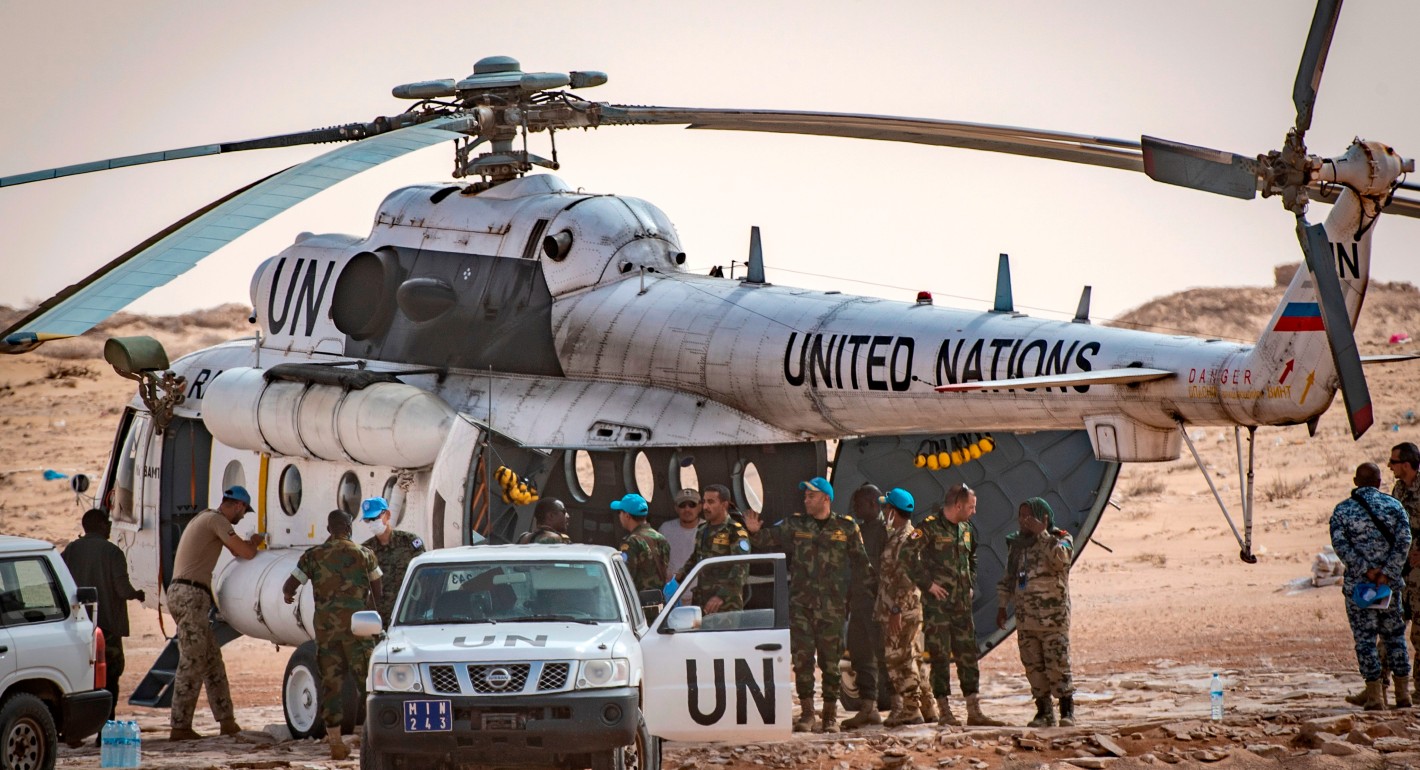
MINURSO personnel in Guerguerat, Western Sahara, in 2020. (Photo by Fadel Senna/AFP via Getty Images)
MINURSO’s renewal by the Security Council became highly politicized. Its expiration brings concerns of renewed violence and the future of demining efforts.
What was MINURSO?
The United Nations Mission for the Referendum in Western Sahara (MINURSO) was set up in April 1991 following a ceasefire between Morocco and the Polisario Front, a Sahrawi political and military group fighting for the independence of Western Sahara. As MINURSO’s name suggests, a key part of its original mission was to coordinate a referendum for the people of Western Sahara to vote on whether they wished to integrate their territory into Morocco or to become an independent state.
The referendum never happened because of a variety of political and logistical challenges, but over the past thirty-five years, MINURSO has carried out other duties to try to maintain calm in the region. It primarily monitored the parties’ ceasefire, which broke down in November 2020 when the Polisario Front declared it over. MINURSO also removed explosive ordnance in one of the most heavily mined areas in the world, and it supported the diplomatic work of Personal Envoy of the UN Secretary-General for Western Sahara Staffan de Mistura, who remains engaged in finding a negotiated settlement to the conflict.
Why is the mission ending, and why are the United States and Russia involved?
The mission expired at midnight on October 31, when the UN Security Council failed to agree on a resolution to extend it. This shutdown was far more abrupt than expected, but the writing was on the wall in many ways.
MINURSO, like most UN peacekeeping missions, faced an annual renewal vote in the Security Council, but that renewal process had become highly politicized over the past several years. (In 2018, the Security Council shortened the renewal cycle to every six months to put pressure on Morocco and the Polisario Front to resume negotiations, but it reverted to the annual renewal cycle in October 2019.) During last year’s renewal, the Security Council made Morocco’s autonomy plan, which calls for the territory to be semiautonomous, the basis for future negotiations. It also ordered a strategic review of MINURSO. That was followed by three rounds of high-level talks between Morocco and the Polisario Front that have so far failed to produce an outcome.
The United States is the so-called pen holder, meaning it drafts the Security Council’s Western Sahara resolutions, and it has been aggressively seeking an end to the conflict in recent years. In December 2020, at the tail end of President Donald Trump’s first term, the U.S. policy toward Western Sahara changed dramatically when the administration recognized Moroccan sovereignty over the territory. The U.S. decision, which was tied to Morocco’s normalization with Israel as part of the Abraham Accords, opened the door for several other key players to follow suit. Spain (2022), France (2024), and the UK (2025) now all back Morocco’s autonomy plan.

The new administration has an opportunity to broker an end to fifty years of violence and tension.
In advance of this year’s renewal vote, the United States drafted a resolution that would remove the “R” from MINURSO’s name and mandate, as a definitive sign that a referendum was never going to happen. That did not go over well with the Polisario Front or its allies, including Algeria and Russia, which saw the U.S. draft as overly biased in favor of Morocco in that it would “legitimiz[e] a status quo based on occupation.” Russia vetoed the U.S. resolution and submitted one of its own that would simply roll over the past resolutions. But that resolution also failed, with three in favor, eleven abstentions, and the United States against, leaving MINURSO without a path forward. (Security Council resolutions generally need nine yes votes to pass.)
Is this how UN missions normally end?
Not at all. Although there are a few other examples of UN missions ending by veto—such as the UN Observer Mission in Georgia—in most cases, either one of the parties demands that the mission leave or the situation on the ground becomes untenable. The UN Operation in Somalia’s peacekeepers transitioned out of the country over several months, rather than overnight.
So what is the status of Western Sahara now?
Importantly, nothing was decided by failing to renew MINURSO’s mission. Morocco is claiming victory and is seeking to end the UN-led political process around the territory, but Western Sahara remains contested according to international law. And as UN Secretary-General António Guterres said, the right to self-determination did not go away with the Security Council veto. Additionally, MINURSO was one of the few modern peacekeeping missions without a human rights monitoring mechanism, leaving much of what transpired in Western Sahara a black box to human rights observers. That has not changed.
De Mistura’s role has also not changed. He will continue working with the parties as well as the United States, France, Spain, and others to find a negotiated settlement to the conflict. But the abrupt end to MINURSO has likely diminished trust between the parties.
How might this affect the situation on the ground?
One of the biggest concerns is the remaining demining efforts. Journalists have referred to the area along the 2,700-kilometer (1,678-mile) berm that runs through Western Sahara as the world’s longest continuous minefield, with thousands of victims of unexploded ordnance on both sides of the divide.
Additionally, what happens to the Sahrawi refugees in camps within Algeria remains a big question. U.S. Ambassador to the UN Mike Waltz cited the horrific humanitarian conditions in the Tindouf camps as part of his justification for the U.S. draft. On Monday, the speaker of Morocco’s upper house of Parliament urged camp residents to “return home,” but whether refugees will be allowed to return to Morocco—and what their status will be if they choose to do so—remains up in the air.
Finally, there are fears that the region could see a resumption of violence. While the conflict has remained relatively calm, there have been periodic upticks in violence since 2020. Without the UN observers there to verify incidents or claims from either side, attacks become harder to confirm and easier to exploit.
What will you be watching for in the coming weeks and months?
On November 10 the UN General Assembly will meet to discuss the vote, giving Algeria and the Polisario Front a chance to make their case for self-determination before the full UN membership. I’ll be paying close attention to how the wider UN body responds. That meeting will come after Moroccan King Mohammed VI’s annual speech on Western Sahara. That speech takes place on November 6—the anniversary of the Green March, which opened the door for Moroccan control of the territory.
We also have not yet seen what the Moroccan autonomy plan looks like in detail. I’ll be watching how Morocco plans to administer the territory and what the reaction of the international community—both those in support of the plan and those opposed—looks like once those details are public.
The latest from Carnegie scholars on the world’s most pressing challenges, delivered to your inbox.
Acting Co-Director and Senior Fellow, Middle East Program
Sarah Yerkes is acting co-director and a senior fellow in the Middle East Program at the Carnegie Endowment for International Peace. Her research focuses on democracy and governance, U.S. foreign policy towards the Middle East and North Africa, and political and economic reform in Tunisia.
Recent Work
Nathan J. Brown, Alper Coşkun, Amr Hamzawy, …
Sarah Yerkes, Natalie Triche, Amr Hamzawy
Carnegie does not take institutional positions on public policy issues; the views represented herein are those of the author(s) and do not necessarily reflect the views of Carnegie, its staff, or its trustees.
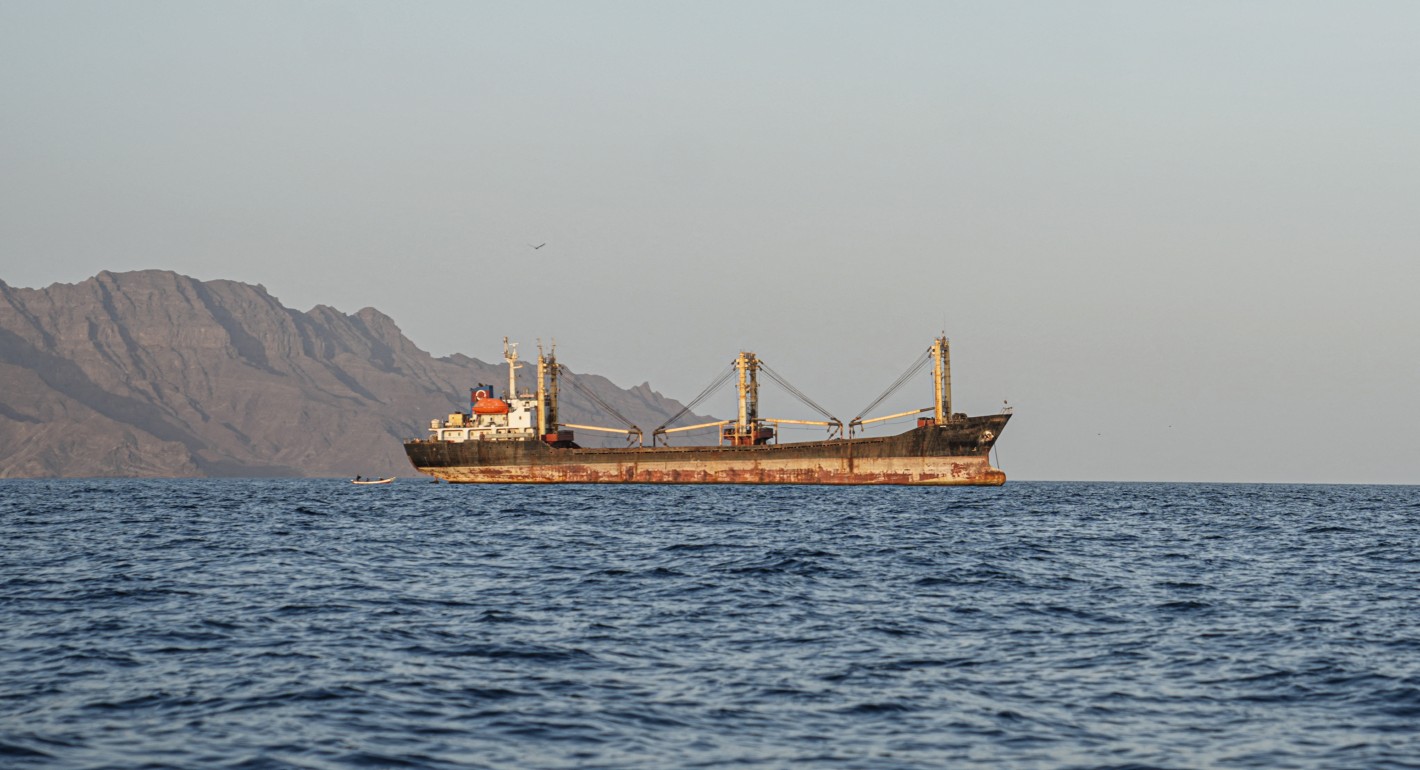
The Horn of Africa countries are among those facing a new security calculus.
Andrew Leber, Lesley Anne Warner
The ninety-three-year-old Biya’s absence and refusal to name a vice president threaten to upend domestic and regional stability.
Lesley Anne Warner
The conflict has sent economic and political shock waves through a country with no representation at the negotiating table—and Kenya is not alone.
Georgia Schaefer-Brown, Jane Munga
Washington’s transactional foreign policy is making it indistinguishable from Beijing’s, with consequential implications for African agency.
Jane Munga
The impacts of the Faye-Sonko rupture could go well beyond the country’s borders.
Lesley Anne Warner